

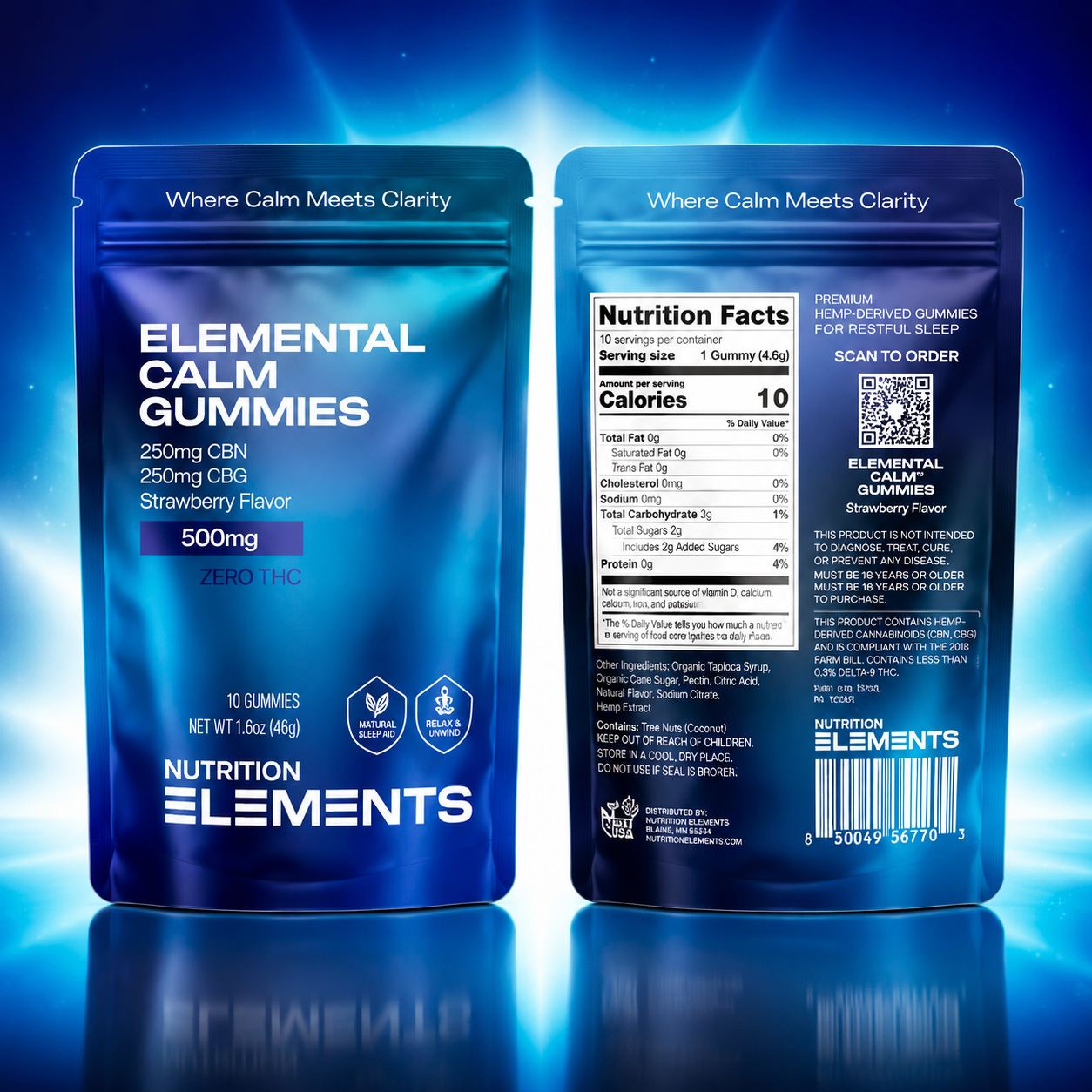
If you're comparing CBG vs CBN for sleep, here's the short answer: CBN is the cannabinoid most closely tied to sleep itself, while CBG is better known for easing stress and helping the body settle before bed. CBN tends to suit people who wake up during the night. CBG tends to suit people who struggle to get calm enough to fall asleep in the first place. Because those are different problems, many nighttime formulas combine the two.
This guide walks through what each cannabinoid is, how they differ at night, what the early research actually says, and how to pick a starting point. New to cannabinoids and sleep? Start with our complete guide to CBD for sleep.
CBG vs CBN at a glance
| CBG (cannabigerol) | CBN (cannabinol) | |
|---|---|---|
| Best known for | Calm, stress support, settling the body | Sleep, fewer nighttime wake-ups |
| The sleep problem it suits | Too wound up or tense to fall asleep | Waking at 2 to 4 a.m. and struggling to drift back |
| How people describe it | "Even," settled, not heavy | "Sleepy," ready for bed |
| Comes from | Young hemp plants (the "mother cannabinoid") | Forms as hemp compounds naturally age |
| Intoxicating? | No | No (non-intoxicating in hemp products) |
| Typical starting amount | ~10 to 25 mg | ~20 mg |
| Found in | Calm blends, some daytime formulas | Sleep-specific gummies and oils |
What is CBG?
CBG (cannabigerol) is often called the mother cannabinoid because young hemp plants produce it first, then convert it into CBD, THC, and other compounds as they mature. It is non-intoxicating, so it will not get you high.
In wellness routines, CBG shows up in calm and stress-support blends more than in dedicated sleep formulas. People who use it at night usually describe the effect as settled rather than sleepy, which is why it pairs so naturally with a sleepier cannabinoid like CBN. For the full story, read What Is CBG?
What is CBN?
CBN (cannabinol) forms as hemp compounds break down over time with exposure to heat, light, and oxygen. That aging process is behind the old folklore that aged cannabis makes people drowsy. In hemp products, CBN is non-intoxicating, and it has become the go-to minor cannabinoid for nighttime formulas.
Where CBG leans toward settling the body and mind, CBN is more specifically associated with sleep continuity, meaning fewer wake-ups once you're down. Our guide What Is CBN? covers it in depth.
CBG vs CBN for sleep: the difference that matters
When you're standing in front of two bottles, this is the practical distinction:
- If stress is what keeps you up (tension, a body that will not relax, a mind still running), CBG is the one people reach for. It targets the wind-down, the part of the night that happens before sleep.
- If staying asleep is your struggle (you drift off fine, then find yourself staring at the ceiling at 3 a.m.), CBN is the cannabinoid with the stronger reputation for sleep itself.
Plenty of people deal with both at once. That overlap is exactly why CBG and CBN are so often blended into a single nighttime gummy instead of being sold as rivals.
What does the research say?
Cannabinoid research is still young, and it's worth being honest about where things stand:
- CBN and nighttime waking: A 2023 placebo-controlled trial of 321 adults reported that participants taking 20 mg of CBN experienced fewer nighttime awakenings and less overall sleep disturbance than the placebo group. Encouraging, but still one trial.
- CBN in the lab: A 2024 University of Sydney study published in Neuropsychopharmacology found CBN increased total sleep time using objective measures, though that work was done in animal models rather than humans.
- CBG and calm: Human data on CBG is thinner. A 2021 survey published in Cannabis and Cannabinoid Research found that most CBG users took it for anxiety-related reasons or sleep and reported perceived benefit, but survey results reflect self-reported experience, not controlled trials.
The fair takeaway: early signals for CBN and sleep continuity are genuinely interesting, CBG's calming reputation rests mostly on user experience so far, and everyone responds a little differently. Starting low and paying attention to your own results still matters more than any single study.
Why CBG and CBN work as a pair
A good night has two halves: getting to sleep and staying there. CBG speaks to the first half. CBN speaks to the second. Put together, they cover more of the night than either could alone, which is the whole logic behind combining them in one formula.

Elemental Calm CBN + CBG Gummies
Zero THC strawberry gummies that pair CBN and CBG in one nighttime formula, made for winding down and staying settled. $16.99
Shop Elemental Calm →Prefer CBD in the mix as well? Our Sleep Gummies with CBD, CBN and Passion Flower take the same nighttime approach with a different blend.
How to choose (and how to start)
- Name your pattern. Trouble relaxing into sleep points toward CBG. Middle-of-the-night waking points toward CBN. Both problems point toward a combined formula.
- Start low. Around 20 mg of CBN or 10 to 25 mg of CBG is a common starting range, taken 30 to 60 minutes before bed. Our sleep dosage guide goes deeper.
- Give it a week or two. Cannabinoids tend to fit best inside a consistent nightly routine rather than as a one-off experiment.
- Adjust one thing at a time. Change the amount or the timing, not both at once, so you can tell what actually helped.
Curious how CBD compares to CBN specifically? See CBN vs CBD for sleep, or browse our picks in best CBD gummies for sleep.
Frequently asked questions
Is CBG or CBN better for sleep?
CBN has the stronger reputation for sleep itself, especially staying asleep. CBG is better known for pre-bed calm. Many people get the best results from a formula that includes both.
Does CBG make you sleepy?
Usually not in the heavy sense. People more often describe CBG as settling or evening them out, which can make falling asleep easier without a groggy feeling.
Can I take CBG and CBN together?
Yes. They address different parts of the night, which is why combined CBN + CBG gummies exist in the first place.
Will CBG or CBN get me high?
No. Both are non-intoxicating in hemp products.
How long before bed should I take them?
Most people take gummies 30 to 60 minutes before bed, since they need time to digest.
Will CBG or CBN show up on a drug test?
It's possible depending on the product and the test. If that's a concern, choose a clearly labeled zero THC option and read Does CBD show up on a drug test?
About the author: Evan Bosma is the Founder & CEO of Nutrition Elements, focused on customer education and product transparency. View our third-party lab results (CoAs) for every batch →
These statements have not been evaluated by the Food and Drug Administration. These products are not intended to diagnose, treat, cure, or prevent any disease. Consult your healthcare provider before use, especially if you are pregnant, nursing, or taking medication.

How to Read a CBD Lab Report (COA): A Simple Guide