

If you're choosing between CBN and CBD for better sleep, here's the short answer: CBD is most associated with winding down a racing mind, while CBN is the cannabinoid people reach for to stay asleep through the night. They're different tools for different sleep problems, and for a lot of people, the best results come from using them together.
This guide breaks down what each one is, how they differ, what the current research actually shows (and doesn't), and how to figure out which is the better fit for your sleep pattern. For the bigger picture, see our complete guide to CBD for sleep.
CBN vs CBD at a glance
| CBD (cannabidiol) | CBN (cannabinol) | |
|---|---|---|
| Best known for | Calm, winding down, easing a busy mind | Staying asleep, fewer nighttime wake-ups |
| The sleep problem it suits | Trouble falling asleep | Waking at 2 to 4 a.m. and struggling to drift back |
| How people describe it | "Takes the edge off" | "Sleepy," settled |
| Comes from | Extracted directly from hemp | Forms as hemp-derived cannabinoid naturally ages |
| Intoxicating? | No | No (non-intoxicating in hemp products) |
| Typical starting amount | ~25 mg | ~20 mg |
| Found in | Broad/full spectrum CBD oils, gummies | Sleep-specific gummies and oils |
What is CBD?
CBD (cannabidiol) is the most abundant non-intoxicating compound in hemp. It won't get you high, and it's the cannabinoid most people meet first. In the context of sleep, CBD is typically associated with helping people feel calmer and more settled at the end of the day, which is why it's a common part of an evening wind-down routine.
The reason it shows up in sleep conversations at all is indirect: many people find that a calmer headspace makes it easier to fall asleep in the first place. If your nights start with lying awake replaying your to-do list, CBD is the cannabinoid usually pointed to.
What is CBN?
CBN (cannabinol) is a minor cannabinoid that forms as hemp-derived cannabinoid ages and breaks down through exposure to heat, light, and oxygen. That's the origin of the old "aged cannabis makes you sleepy" folklore. In hemp wellness products, CBN is non-intoxicating and is specifically associated with sleep, and, increasingly, it has some early research behind that reputation.
Where CBD is about settling down, CBN is more associated with staying down: fewer wake-ups, more continuous sleep.
CBN vs CBD for sleep: the key difference
Here's the distinction that actually matters when you're choosing:
- If your problem is falling asleep (a racing mind, end-of-day tension, can't "switch off") then CBD is the more commonly chosen starting point, because the issue is usually about winding down.
- If your problem is staying asleep (you fall asleep fine but wake at 3 a.m. and can't get back down) then CBN is the one people gravitate toward for sleep continuity.
Most people who sleep poorly actually have a bit of both problems. That's the single biggest reason CBN and CBD are so often combined in a single sleep formula rather than sold as an either/or.
What does the research say?
Research on cannabinoids and sleep is still early, and most of it is preliminary, but it's growing, and it's worth understanding honestly:
- CBN and nighttime waking: A 2023 clinical trial of 321 participants reported that those taking 20 mg of CBN experienced fewer nighttime awakenings and less overall sleep disturbance compared to placebo.
- The first objective CBN evidence: A 2024 University of Sydney study published in Neuropsychopharmacology was the first to use objective measures to show CBN increased total sleep time, though importantly, this study was conducted in animal models, not humans.
The honest takeaway: the early signals around CBN and sleep continuity are genuinely interesting, but the science is young, much of it preliminary or animal-based. CBD's role in sleep is largely indirect (through general calm). Cannabinoids affect everyone a little differently, so personal experience and starting low still matter most.
CBN and CBD together: why the combination often wins
Because falling asleep and staying asleep are different challenges, pairing the two cannabinoids covers more of the night than either alone. A combined formula aims to help you settle and stay settled, which is exactly why well-built sleep products rarely use just one.
Two other ingredients often join them in a complete sleep formula:
- CBG (cannabigerol), another non-intoxicating cannabinoid often included in calming blends.
- Terpenes, aromatic compounds (like those in a multi-terpene blend) thought to round out the experience of a full-spectrum sleep formula.
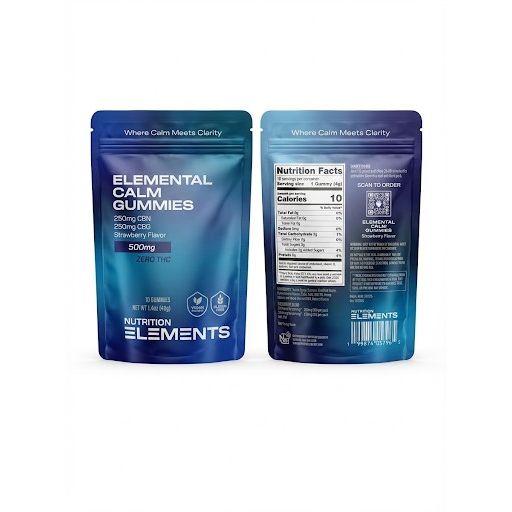
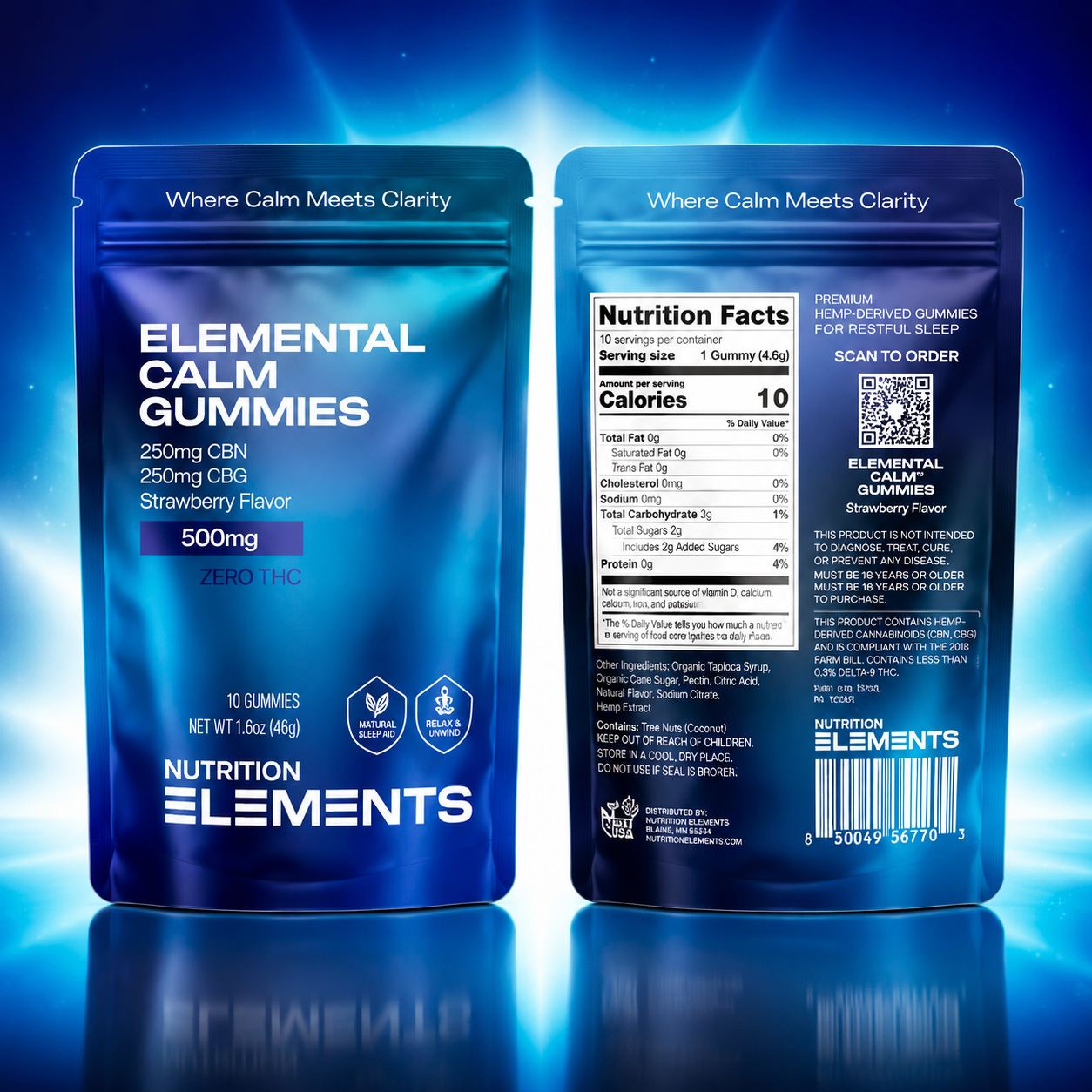
Made for exactly this: Our Elemental Calm CBN + CBG Gummies pair 25 mg of CBG with CBN, built for people who want to wind down and stay settled, without hemp-derived cannabinoid. If you prefer a tincture you can fine-tune drop by drop, our 2,400 mg CBD Sleep + Relaxation Oil combines CBD and CBN with a 16-terpene blend, our most comprehensive sleep formula.
How to choose (and how to start)
- Identify your pattern. Trouble falling asleep, lean CBD-forward. Waking through the night, lean CBN-forward. Both, a combined CBN + CBD formula.
- Pick your format. Gummies are simple and pre-dosed; oils/tinctures let you adjust the amount and tend to take effect a bit faster.
- Start low. A common starting point is around 20 to 25 mg, taken 30 to 60 minutes before bed. See our dosage guide for details.
- Keep it consistent. Cannabinoids tend to fit best as part of a steady nightly wind-down routine rather than a one-off.
Prefer a low-dose hemp-derived cannabinoid option for sleep? See our best hemp-derived cannabinoid gummies for sleep guide, or compare picks in best CBD gummies for sleep.
Frequently asked questions
Is CBN stronger than CBD for sleep?
Not "stronger," different. CBN is more specifically associated with staying asleep, while CBD is associated with general calm that can make falling asleep easier. Many people combine them.
Will CBN or CBD make me feel high?
No. In hemp products, both CBN and CBD are non-intoxicating.
Can I take CBN and CBD together?
Yes, they're frequently combined in a single sleep formula precisely because they address different parts of the night.
How much CBN should I take for sleep?
Research and common use point to a starting amount around 20 mg, taken before bed. Start low and stay consistent. See our CBD & CBN dosage guide, and talk to your healthcare provider about what's right for you.
Will CBN show up on a drug test?
It's possible, depending on the product and test. If that's a concern, choose a clearly labeled Delta-9-free option and see will CBD show up on a drug test?
How long does it take to work?
Tinctures are often felt within 30 to 60 minutes; gummies can take a little longer since they're digested.
About the author: Evan Bosma is the Founder & CEO of Nutrition Elements, focused on customer education and product transparency. View our third-party lab results (CoAs) for every batch →
These statements have not been evaluated by the Food and Drug Administration. These products are not intended to diagnose, treat, cure, or prevent any disease. Consult your healthcare provider before use, especially if you are pregnant, nursing, or taking medication.

CBD 101: A Beginner's Guide to CBD, Hemp-Derived Cannabinoid, and Hemp Wellness
CBD for Sleep: The Complete Guide