

If you're weighing CBD vs melatonin for sleep, here's the short version. Melatonin is a hormone your body already makes, and the supplement version mostly tells your brain it's time for bed, so it fits sleep trouble tied to timing (jet lag, late shifts, a schedule that drifted later). CBD is a compound from hemp that people use to quiet a busy, wired mind at the end of the day. One works on your body clock. The other is more about feeling settled enough to let go. For some people, the two even pair well together.
Below is a plain breakdown of how each one works, which sleep problem each tends to suit, whether you can combine them, and how to start. For the bigger picture, see our complete guide to CBD for sleep.
CBD vs melatonin at a glance
| Melatonin | CBD | |
|---|---|---|
| What it is | A hormone your body already makes | A non-intoxicating compound from hemp |
| How it works | Adds to your body's evening "it's night" signal and nudges your internal clock | Interacts with the endocannabinoid system, which people connect to feeling calmer |
| Best suited to | Sleep trouble tied to timing: jet lag, shift work, a schedule that slipped later | A busy, stressed mind that won't switch off at bedtime |
| How people describe it | A bedtime cue, sometimes noticeable drowsiness | "Takes the edge off," more settled |
| Non-intoxicating? | Yes | Yes |
| Typical starting amount | About 0.5 to 1 mg | About 25 mg |
| Next-morning grogginess | More likely at higher doses | Not commonly reported |
| How it's usually used | Short-term, or to reset a schedule | As a steady nightly wind-down |
What melatonin does
Melatonin is a hormone made by the pineal gland in your brain. Levels climb in the evening as light fades and drop toward morning, which is how your body keeps its roughly 24-hour rhythm. A melatonin supplement adds to that signal, basically telling your internal clock that night has arrived.
That is why melatonin tends to help most when the real problem is timing. Crossing time zones, working overnight, or a bedtime that keeps creeping later can all leave your clock out of step, and a small evening dose can help pull it back. Research generally points to low amounts, often in the 0.5 to 1 mg range, being enough for that job. Bigger doses are not automatically better. A 2021 review of dozens of studies found that higher-dose melatonin raised the odds of next-day drowsiness, the groggy "melatonin hangover" some people notice in the morning. Both the amount and the timing matter, and it's worth asking your healthcare provider what makes sense for you.
What CBD does
CBD (cannabidiol) is the most common non-intoxicating compound in hemp. It won't get you high. Rather than acting on a body clock, it interacts with the endocannabinoid system, a network involved in mood, stress response, and an overall sense of balance.
People rarely say CBD knocks them out. What they tend to report is feeling a little calmer and less keyed up, which is why it shows up in evening routines. The link to sleep is mostly indirect. If your nights start with lying in bed replaying the day, a quieter headspace can make it easier to drift off. That is the reason CBD comes up in sleep conversations at all, even though it doesn't signal bedtime the way melatonin does.
Which one fits your sleep problem?
The useful question usually isn't which is stronger. It's what is actually keeping you awake.
- Your schedule is off. Jet lag, shift work, or bedtimes that keep sliding later point toward melatonin, since the issue is timing.
- Your mind won't slow down. When stress and end-of-day tension are what keep you staring at the ceiling, CBD is the one people usually try, because the goal is winding down.
- You wake at 3 a.m. Falling asleep isn't the trouble, staying asleep is. Here many people look to CBN, a hemp cannabinoid associated with sleep continuity. See CBN vs CBD for sleep and our CBD and CBN dosage guide.
Plenty of people have more than one of these going at the same time, which is part of why no single ingredient is a universal fix.
Can you take CBD and melatonin together?
For most healthy adults, using CBD and melatonin on the same night is generally considered fine. They work through different pathways, and there is no well-known interaction between the two. Some sleep products even combine CBD, CBN, and a little melatonin on purpose. Still, "generally fine" is not the same as "right for everyone." Both can interact with certain medications, including blood thinners and other sedatives, so check with your healthcare provider before combining them, especially if you take prescriptions or are pregnant or nursing.
One practical note. If you've had that heavy, groggy morning feeling from melatonin before, a melatonin-free approach may be worth a look.
A melatonin-free option: CBD, CBN, and passion flower
Not everyone wants to take a hormone every night, and some people simply don't love how melatonin leaves them feeling the next morning. That is the thinking behind our melatonin-free sleep formula, which leans on hemp cannabinoids plus a calming botanical instead.
Passion flower has a long history in traditional wind-down teas, and early studies suggest it may help some people ease into sleep, though that research is still small and preliminary. Paired with CBD, which people use for settling a busy mind, and CBN, which is associated with staying asleep, it's built as a bedtime routine you can repeat nightly without timing a hormone dose.

Made without melatonin
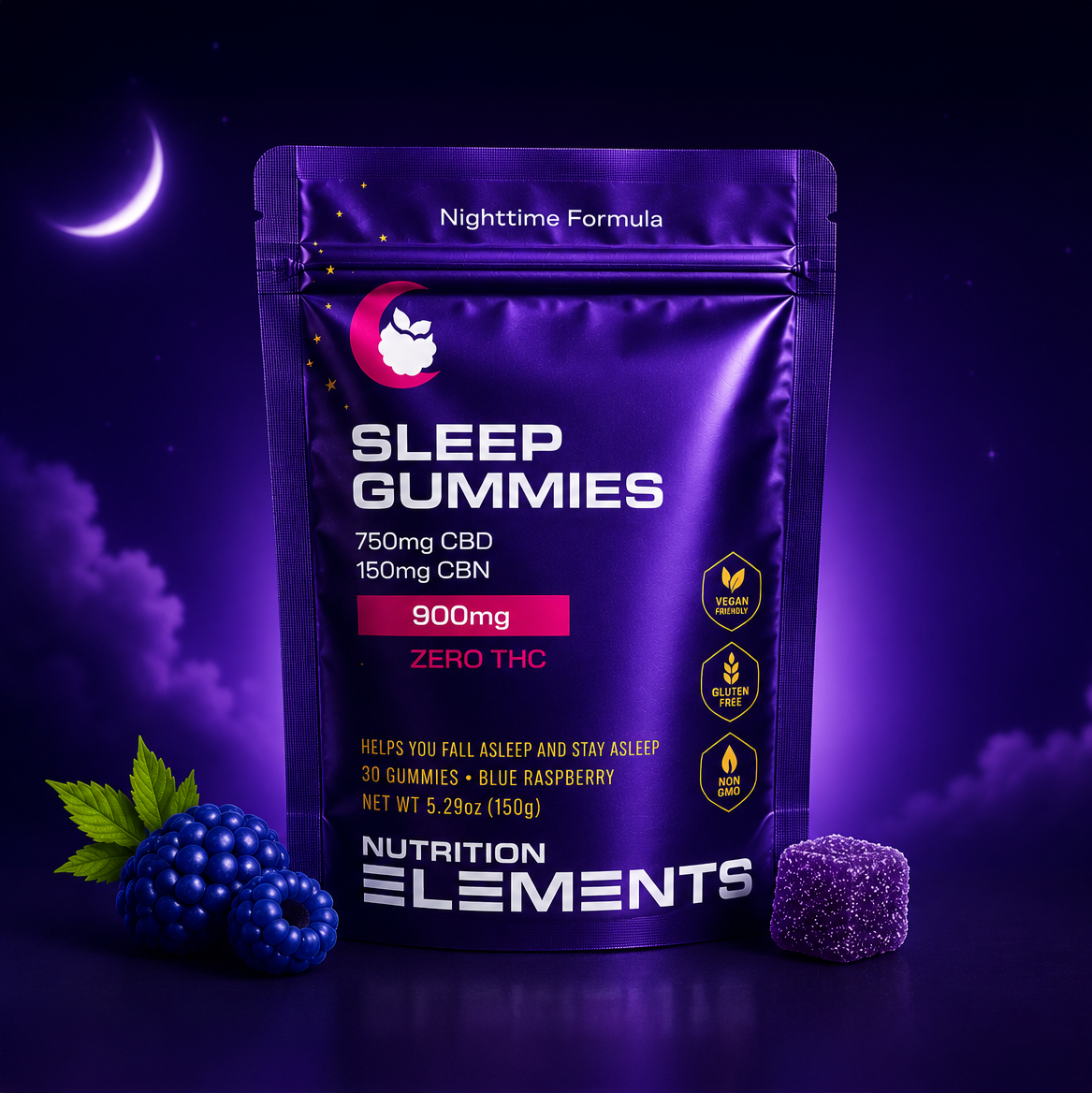
Sleep Gummies with CBD, CBN & Passion Flower
Zero-THC nighttime gummies that pair CBD and CBN with passion flower, the botanical people reach for to ease into rest. No hormone to time, so they're an easy fit for a repeatable bedtime routine. $34.99.
Shop Sleep Gummies →Prefer a tincture you can adjust drop by drop? Our 2,400 mg CBD Sleep + Relaxation Oil combines CBD and CBN with a terpene blend. If you'd rather keep it to cannabinoids only, the Elemental Calm CBN + CBG Gummies are another melatonin-free choice. You can compare formats in our best CBD gummies for sleep guide.
How to choose, and how to start
- Match the tool to the problem. Timing issue, consider melatonin. Busy mind, consider CBD. Waking through the night, look at CBN. If you're comparing the lesser-known cannabinoids, see CBG vs CBN for sleep.
- Start low. With melatonin that often means 0.5 to 1 mg. With CBD or CBN, a common starting point is around 20 to 25 mg, taken 30 to 60 minutes before bed.
- Give it a fair run. Cannabinoids tend to fit best as a steady nightly habit rather than a one-off rescue.
- Keep your provider in the loop, especially if you take medication or have an ongoing health condition.
Frequently asked questions
Is CBD or melatonin better for sleep?
Neither wins across the board. Melatonin suits sleep problems tied to timing, like jet lag or shift work. CBD is what people tend to choose when a stressed, busy mind is the thing keeping them awake.
Can I take CBD and melatonin together?
For most healthy adults it's generally considered okay, and some products combine them on purpose. Because both may interact with certain medications, check with your healthcare provider first.
Does CBD cause the groggy "hangover" that melatonin sometimes does?
People don't usually describe CBD the way they describe a melatonin hangover, though everyone responds a little differently. Starting with a low amount is the simplest way to see how you feel in the morning.
Do Nutrition Elements sleep products contain melatonin?
Our Sleep Gummies are melatonin-free. They use CBD, CBN, and passion flower instead, which is a good fit if you'd rather skip a hormone or haven't liked how melatonin felt.
How much melatonin should I take?
Research often points to low doses, roughly 0.5 to 1 mg, taken about an hour before bed, with higher doses more likely to cause next-day drowsiness. Amounts and timing vary by person, so your healthcare provider is the best guide.
Will CBD make me feel high?
No. CBD from hemp is non-intoxicating.
About the author: Evan Bosma is the Founder & CEO of Nutrition Elements, focused on customer education and product transparency. View our third-party lab results (CoAs) for every batch →
These statements have not been evaluated by the Food and Drug Administration. These products are not intended to diagnose, treat, cure, or prevent any disease. Consult your healthcare provider before use, especially if you are pregnant, nursing, or taking medication.
